Founder letter
Every month we collect everything we've learned about how LLMs pick brands and share it with you.



If you work in SEO, content, or growth, you’ve probably noticed how fragmented the AI visibility space still is. There is no single source of truth, but there are a few places consistently publishing useful research. Here is an overview of where to look and what you’ll actually get from each.
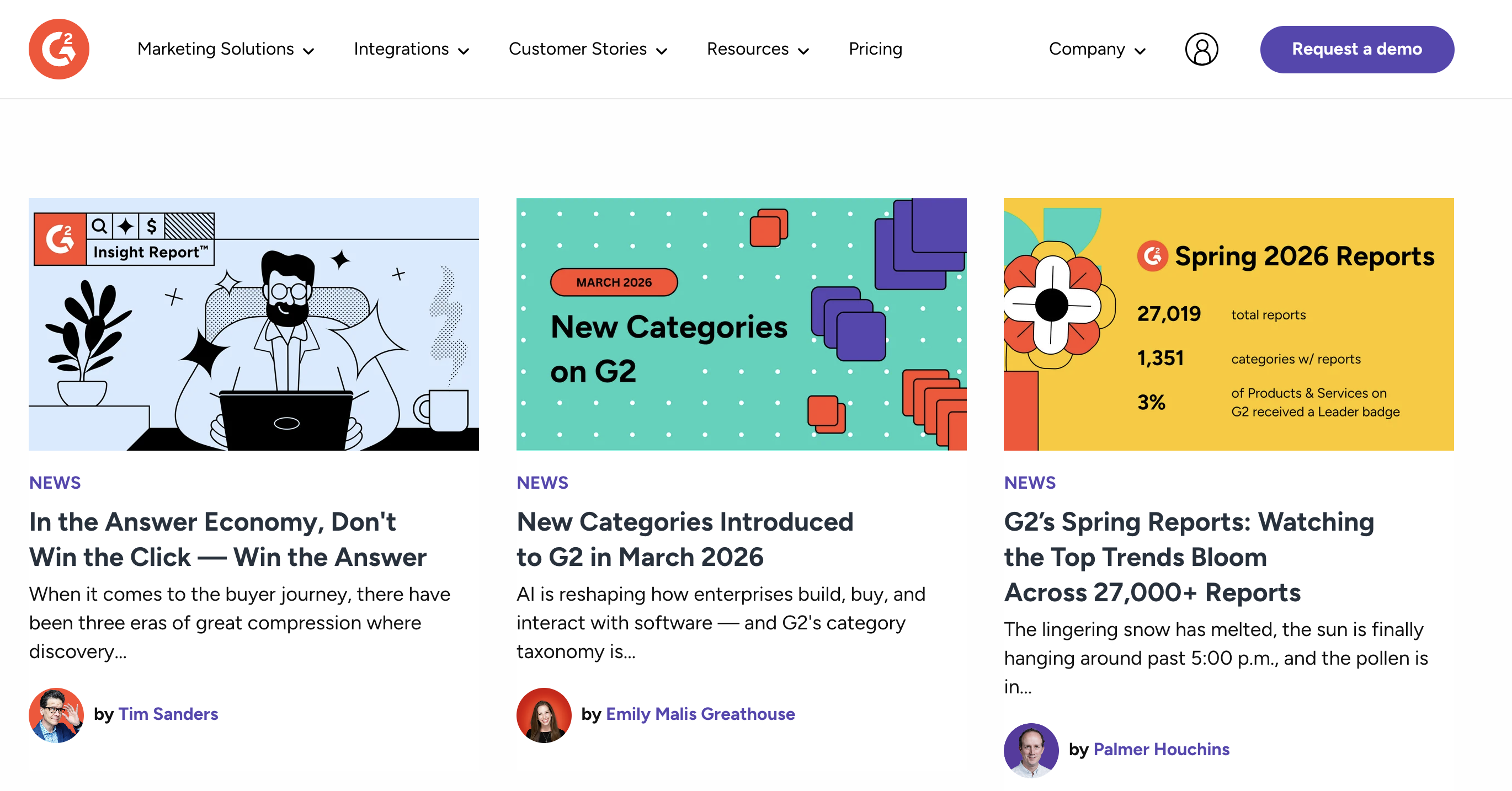
Since review platforms started to play a major role in AI visibility, G2 has been actively pushing in that direction.
They are now publishing reports like G2 2026 AI Search Insight Report.
A clear view on how buyer behaviour and AI search intersect.

Ahrefs is probably the most active company in the space right now when it comes to publishing AI search research.
Very useful, but worth reading with the understanding that LLMs go beyond classic SEO logic.
Strong, data-backed insights into:

Semrush consistently publishes solid research based on large datasets.
There is still a clear tendency toward SEO framing of the problem.
A strong understanding of:

SE Ranking publishes surveys and studies on how SEO and marketing teams are adapting to AI.
A grounded view of how teams are actually adapting.

Similarweb provides market-level reports on traffic trends and how AI is reshaping digital discovery.
A macro view of what’s happening.

Turbine focuses on a different layer: how AI visibility actually works from a mathematical perspective.
AI visibility is not just tracking. It is a data science problem. LLMs map relationships between concepts using mathematical representations, not just keywords.
A way to move from observing mentions to understanding and influencing outcomes.
Each of these sources covers a different layer:
Together, they give a much clearer picture of a space that otherwise looks messy.
You can find AI visibility research on G2, Ahrefs, Semrush, SE Ranking, Similarweb, and Turbine. Together, these sources cover buyer behaviour, citation patterns, market trends, practitioner insights, and how AI visibility works.
There is no single best source. The most useful approach is to combine several: G2 for buyer research, Ahrefs and Semrush for large-scale studies, Similarweb for market trends, and Turbine for the data science side of AI visibility.
Every month we collect everything we've learned about how LLMs pick brands and share it with you.