Language models operate in vector space. Every prompt and every piece of content gets converted into a vector, a set of numbers that captures its meaning.
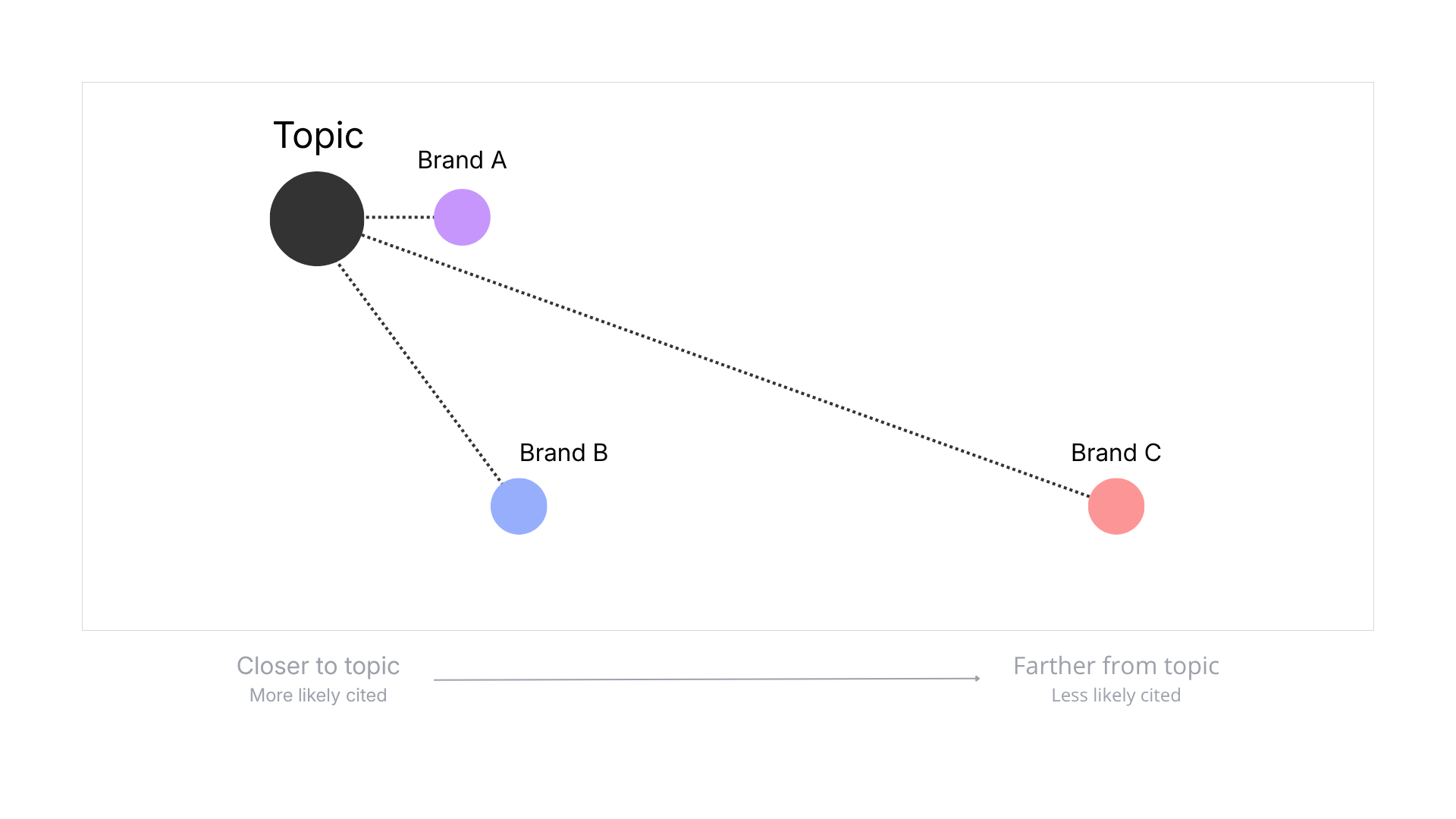
The mathematical distance between those two vectors predicts how likely a model is to cite that content when answering the prompt. Smaller distance, higher chance.
You can calculate that distance before you publish. If it's large, the content has a low chance of being cited, and you know that before it goes live.
We'll validate all your drafts and send you the scores.
No. High semantic proximity is the foundation, but it is not the only factor. The model's final selection for a citation is also influenced by your domain trust, the technical health of your site, the overall semantic scope of the topic, and other factors.A high score means you have the right "key" to open the door, but the model still checks your credentials before letting you in.
If you are serious about AI optimisation, start by building a list of prompts specific to your brand. Use this tool to ensure your content achieves a high proximity score for those queries. Then, verify the results by creating a free report on Turbine to track your actual citations and visibility over time.
We build optimised content on an ongoing basis, validate every piece before it goes out, and only publish what has a real shot at being cited. Talk to us, and we'll run it for you, at scale.