MODULE_06

Engineer content for AI visibility

Your blog might rank on Google, but is it invisible to ChatGPT? We use data science to build content briefs that align with the mathematical logic of AI models, ensuring you get cited.
Schedule a consultation

Why traditional content fails in AI search

01: Keywords vs. meaning
Traditional SEO is about repeating keywords. AI models don't count words; they analyze the relationship between concepts. If your content is shallow, the AI ignores it, even if you have the right keywords.

02: The distance rule
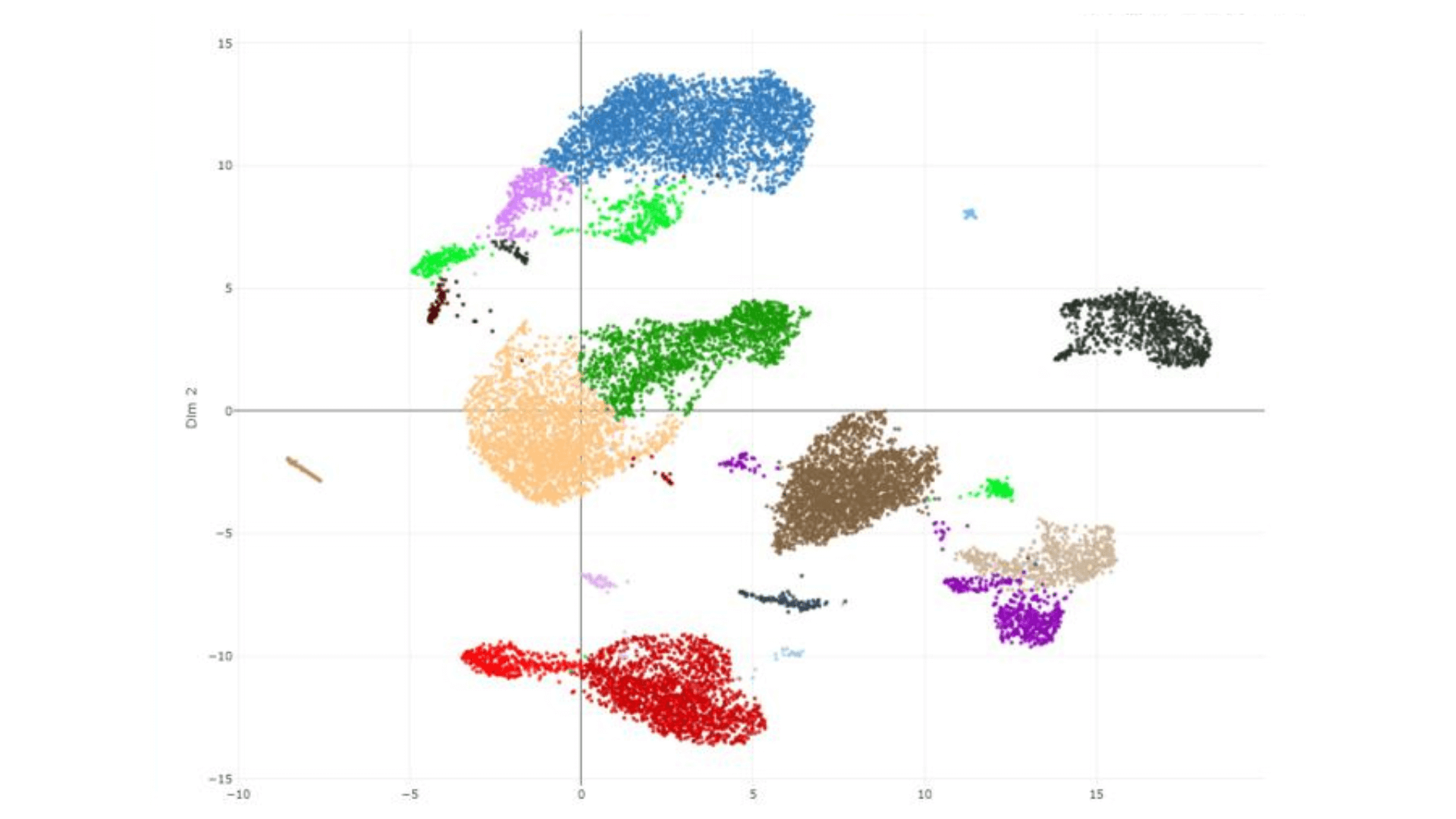
AI organizes information like a map. Expert concepts sit close together. Generic content sits far away. If your content is "too far" from the center of the topic, the algorithm will not pick you.

03: The context requirement
To trust an answer, the model expects certain details to be present. If you talk about "CRM" but miss the related concepts (like "Automation" or "Pipelines"), the AI assumes you aren't an expert and skips you.

>> Explore how LLMs work

What you get

You receive content that is already structurally sound, rich in required entities, and mathematically aligned with the model—ready for your final polish and publishing.

Feature 06.1

Semantic analysis

We analyze the top-ranking competitors to understand their how rich their content is. We give you the target metrics to beat them.
Feature 06.2

Cluster planning

LLMs trust "Hubs" of authority. We map out a series of interlinked articles designed to cover an entire semantic field, proving to the AI that you are the expert.
Feature 06.3

Content development

We deliver structured, ready-to-edit drafts that already contain the necessary entity density, flow, and semantic relationships required to satisfy the algorithm.

We act as your AI search team

This level of optimization requires more than a software tool. We execute the strategy for you. Our data scientists build a bespoke semantic model for your niche and hand your content team a precise architectural blueprint to win.

Book a strategy call

The research

>> More publications

Access our findings

The algorithms change daily. We track thousands of prompts and publish our internal experiments on prompt volatility, ranking factors, and semantic gaps.

Thank you! Your subscription has been received!
Oops! Something went wrong while submitting the form.

FAQ

How many prompts can I track per week?
Are the recommendations generated automatically or reviewed by human analysts?
Can I customize which prompts are monitored?
How soon will I see results from the recommendations?
Does Turbine show which sources power chatbot responses?
Can I track competitors alongside my own brand?